ROBERT REDFORD REMEMBERED
Posted September 17th, 2025 at 12:42 pmNo Comments Yet
CINERAMA #62
REMEMBERED
SCREEN CHARACTER INVOLVED AUDIENCES IN WHAT SEEMED TO BE A GENUINELY GOOD IDEA
by PETER THOMAS BUSCH
E
asy enough to become a character on screen or an idea or an instrument of a series of events that capture the imagination of a generation, but to be one and the same as all of these film elements is quite extraordinary.
The lions run wild in Africa. The rivers flow with much force in Montana. The Indians dance in the sun on the American plains.
Robert Redford made people like his screen characters because movie goers wanted to believe that the idea behind his acting roles existed and would continue to exist, tried and tested by the adversity commonly experienced by everyone from day to day.
The film narratives were often a series of happenstances strung together by directors as the way life too often unfolded to ruin a person’s dream or seldom that rare moment of whimsy when the dream might be realized afterall.
Redford created an on-screen character who naturally compelled the scenes forward, often from the introductory scenes to the closing scenes, with a genuine heart felt conviction of purpose. And then, as the credits rolled, the real tears would well up and gradually fall one by one.
The cinema character was so extraordinarily compelling that the next film was like a continuation of the previous film, just that Redford had a different wardrobe and his character had gotten himself into a whole different type of trouble than before.
Hollywood’s leading marque stars shared the screen with Redford, even before he was a marque star himself, and often with smashing success.
Marlon Brando and Jane Fonda shared the screen with Redford in The Chase (1966).
Then Natalie Wood and Charles Bronson costarred with Redford in This Property Is Condemned (1967).
Next was Jane Fonda playing Redford’s love interest when everybody loved Jane Fonda in Barefoot in the Park (1967).
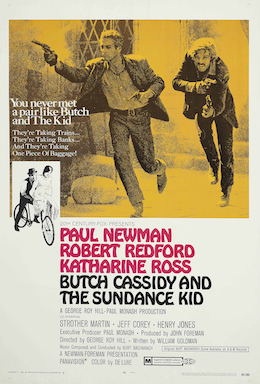
Then came Paul Newman, one of the great cinematic idols of the era, as great as Elizabeth Taylor and Richard Burton. Newman and Katharine Ross costarred with Redford in Butch Cassidy and the Sundance Kid (1969). Newman was the personification of Hollywood at the time of filming, and Redford became an international movie star as a result of the film role.
Newman, Ross and Redford had a lot of onscreen chemistry in the western genre film that followed a band of outlaws around from train robbery to bank vault and then off to the next town to do it all over again.
Newman’s Butch Cassidy, Ross’s Etta Place and Redford’s The Sundance Kid were underdogs from the very beginning. The characters were stealing but not killing, running but not hiding, living but not dying, and always in trouble along the way, while almost always laughing and joking around about the trouble that had caught up to them.
Redford’s characters were always falling behind and always seemed to have to make something up for some past short coming from then on.
In Downhill Racer (1969) with Gene Hackman, Redford’s downhill skier had to overcome himself before becoming a world class champion.
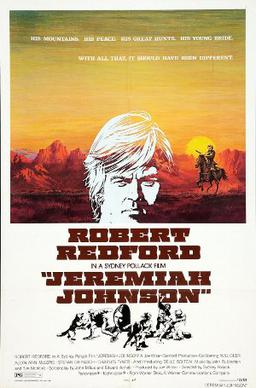
In Jeremiah Johnson (1972) with Will Geer, Redford’s survivalist had to overcome the wilderness, and then a lot of enemies he made for having survived for so long on his own.
In The Candidate (1972) Redford was the perfect politician.
And in Three Days of the Condor (1975) with Faye Dunaway, Redford portrays a United States Central Intelligence Agency researcher reading books for hidden meanings like the NSA reads email streams today. Turner does well as part of a team until one day he goes out to get lunch for his coworkers, and by the time he gets back ,the entire covert operation has been wiped out by assassins.
Redford’s character survived the assassination by a quip of fate. The movie has just begun though, and Turner spends the rest of the film trying to surface from the underground world of espionage into the light of the truth of the day before his voice becomes silenced.
Turner’s job at the CIA office becomes the narrative device. And just like Redford’s other characters, the idea is more important than right and wrong.
Turner kidnaps a stranger named Kathy, played by Dunaway, because he has no place else to go that is safe from the double blind adversity.
Turner’s character is almost immediately forgiven though, because of his heightened state of anxiety and paranoia, and because he continues in the good guy role throughout the film, despite inflicting obvious harm on Kathy. Dunaway is eventually convinced in Redford’s greater cause and connects with him just as the audience does during the search for truth.
This ability to infringe on the moral divide for a greater cause begins with his Sundance Kid character, but the cinema motif carries Redford through to many more films including one of the great biopic films about press freedom and American democracy.
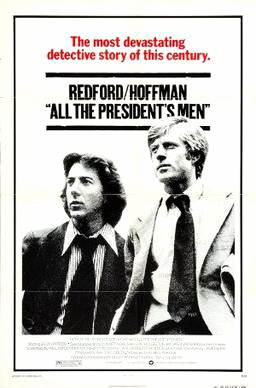
All the President’s Men (1976), costarring Dustin Hoffman, is about the two Washington Post reporters who broke the Watergate story that brought down United States President Richard M. Nixon. Nixon had created his own domestic espionage team that operated out of the Oval Office. The Republican Presidency falls sideways when the covert-op team is caught by Washington DC police breaking into the Democratic National Party offices at the Watergate Hotel.
Redford plays reporter Bob Woodward. And Hoffman plays reporter Carl Bernstein. The costars
show how the journalists eventually must rely on a secret informant to prove to their editor, Ben Bradlee, that the story was true.
Then something remarkable happens. Redford turns his on-screen persona into full length feature films by working his cinema art from behind the camera as a director.
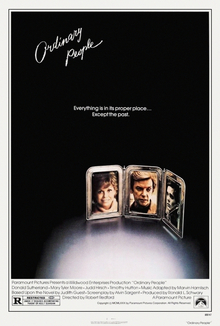
In Ordinary People (1981) the idea of an American family kept together on an emotional shoestring won Redford the Oscar for his directorial debut.
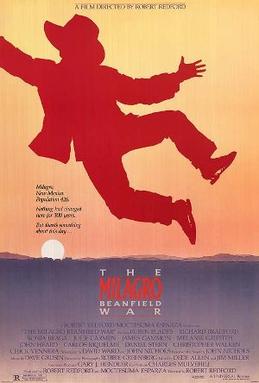
In The Milagro Beanfield War (1988) the farming community stood up to corporate America.
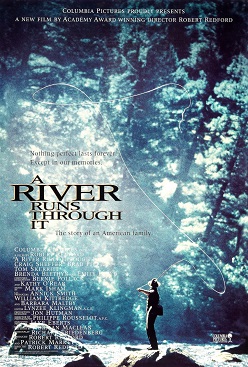
In A River Runs Through It (1992) two young brothers taken different paths but stay together in kinship through the decades.
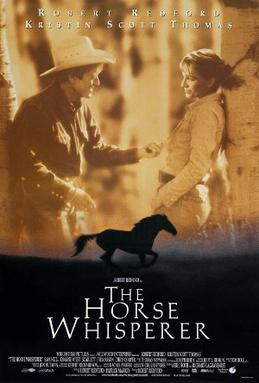
In The Horse Whisperer (1998) a young family crosses from the East Coast into the Midwest to save a horse. The spirit of a young girl is saved in the process.
Characters in a Redford film must work through personal tragedy, when just to finish the narrative is an accomplish that the audience takes with them after the screen credits have rolled.
Either in front of the camera as an actor or behind the camera as a director, Redford inserts characters into an idea. This process of personification compels people to bond and root for the character, because the idea is just not any ordinary idea but an American ideal on which community and nation are built.
The character, as a genuine, heartfelt ambassador, stays the same, but the idea that motivates the character changes from film to film.
Redford continues to oscillate between directing and acting. And just as before, Redford inserts his persona into characters that do not entirely play by the rules, although the audience roots for him nonetheless, in the common societal interest of a scrappy underdog fighting against a greater injustice.
Redford repeatedly rationalizes that breaking the rules is a smaller, inconsequential immorality, necessary to overcome life’s many obstacles.
Redford teams up with Brad Pitt again in Spy Game (2001), after casting Pitt in A River Runs Through It. Pitt is an experienced actor by this point in his career, and Redford takes up the film role as a CIA mentor chief as if to state that this character sums up all his other characters in a self-referential narrative.
Redford’s CIA character acts through several small stings to acquire information within the Central Intelligence Agency offices in Langley, Virginia, while his costars’ CIA characters’ disbelief is suspended, just as the audience’s disbelief is suspended.
Redford spent a lifetime in film, either in front of or behind the camera, and he has often taken his ideals with him into the real world, supporting various political and environmental causes, including putting the independent film industry on firm footing with the establishment of the Sundance Film Festival.
Before Sundance, independent films struggled to find a theatre for screening let alone financing.
Several motion pictures have obtained a first screening at Sundance and then gone on to major commercial success because of the presence created at the film festival, all of which adds to Redford’s movie icon status.
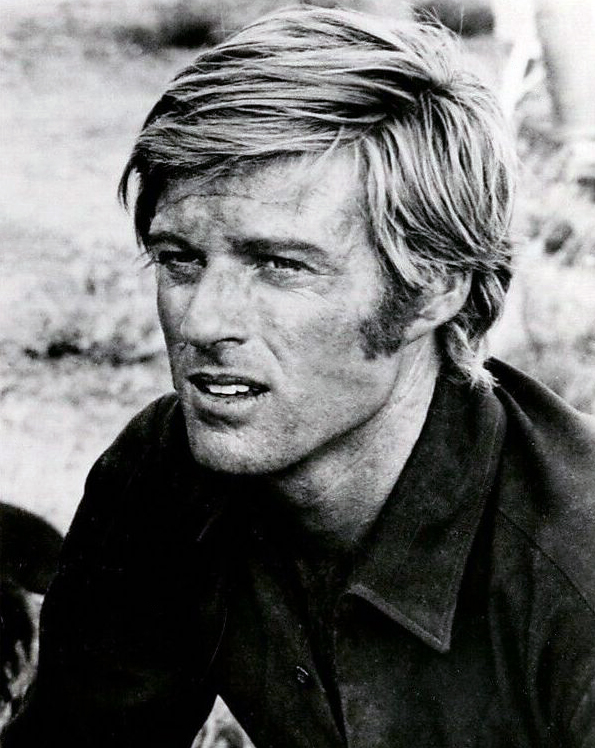
ROBERT REDFORD 1936 – 2025