
THE BOSS BIOPIC
Posted October 26th, 2025 at 8:10 pmNo Comments Yet
IN REVIEW
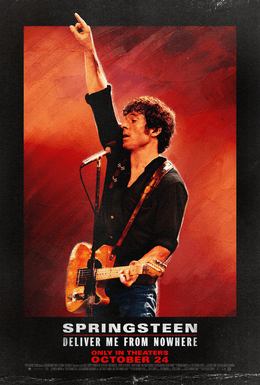
COOPER STAYS AWAY FROM EXTENDED MUSIC VIDEO FOR BIOPIC
by PETER THOMAS BUSCH
One extended moment in the life of a musician is captured on film to show how the superstar became rooted in the collective consciousness.
Director Scott Cooper recreates the few weeks of creativity behind the Bruce Springsteen album, Nebraska, released in 1982, in the biopic, Springsteen: Deliver Me From Nowhere (2025).
When the film begins, Springsteen is still becoming known, and not yet entrenched as a rock superstar. Springsteen knows enough about his recent popularity to know not to lose the opportunity for greatness. But the challenge to repeat and build on the previous success is immense.
Jeremy Allen White performs as Bruce Springsteen, though less as a rockstar on stage and more of a songwriter exploring the creative process. White shows Springsteen liking everything slowed down so he can be thoughtful during very special, often fleeting creative moments.
The 119 minute runtime is perfect timing for the timeline since the screen is not overly cluttered by the biographical musician’s popular hit songs, which everyone knows anyway. And the director decides not to crunch down important moments pulled from a lifetime for a career retrospective.
Cooper is known for creating gritty films about the darker side of Americana, such as Hostiles (2017), Black Mass (2015) Out of the Furnace (2013) and Crazy Heart (2009).
Instead of forty years, Cooper focuses on 14 days in the life of a songwriter, and takes the audience to Springsteen’s home recording studio where he produces a demo tape.
The camera also goes to favorite places, such as the carousel at Ashbury Park, and the small club stage of the Stone Pony.
The narrative, like the musicography, is rooted in Springsteen’s boyhood home and the troubles he experienced there with his dad coming home unhappy and arguing with his mom while carrying a beer in his hand.
White shows how Springsteen is determined to create another album, but the songwriter’s thoughtful reposes ultimately lead him back to his childhood and his angry, shouting dad. The lead character even drives by the childhood home a couple of times, in between flourishes of creativity.
Cooper accents these negative moments by presenting the scenes in black and white, which are in sharp contrast to the more positive scenes shown in colour. Everything slows down as Springsteen looks into his past through the rearview mirror of his eighties Detroit made muscle car.
Graham Springsteen is played by Stephen Graham, who creates a passive aggressive father figure to explain the father and son relationship. Cooper eventually brings Douglas, and Springsteen’s mother, Adele, played by Gaby Hoffman, into the real time narrative, with Graham using a facial prosthetic and body suit to portray an older, heavier set father who has reconciled with his son.
An original score continues on in between black and white flashback scenes with the tone and atmosphere created by Graham.
The film is not all about the music business either as Cooper creates several poignant moments between Springsteen and various characters that underscore the rock stars humble American heritage.
Every musician needs a manager to keep them together, before, during and after the studio sessions and promotional tours. And Jeremy Strong recreates this trusted nurturer as Jon Landau.
Landau is shown to help with the business side of the music industry, but he also knows enough not interfere with the creative side of the process.
And the rest is music history.