WILL
CINERAMA

RISING INTO A STATE OF GRACE
by PETER THOMAS BUSCH
The greatest boxer in the world eventually gets another chance at an Oscar as the greatest father-coach with two daughters heading to the pantheon of tennis championships.
Will Smith plays the highs and lows of competition on the world stage and then various forms of existence in between, including the focus of a bio-chemical engineer in an apocalyptic nightmare, and the fear of slave running toward freedom in a dark telling of one of humanity’s cruelest conditions.
Smith plays characters stuck within difficult moral dilemmas who struggle but ultimately do rise again into a state of grace.
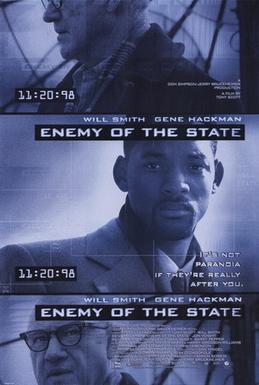
In Enemy of the State (1998), Smith plays a labour lawyer too quickly getting entangled with the mob. Director Tony Scott initially creates the illusion that the mob will run the narrative, until Clayton becomes sideswiped by a more sinister legal entity.
Clayton becomes befuddled by the attention he receives from Washington DC police, only to find out later that a chance encounter with an old friend has turned him into a target for an ambitious deputy at the National Security Agency.
Scott reveals the assassination at the onset of the film, and then runs the storyline about Clayton evading capture, desperately innocent, but targeted nonetheless. To compel the narrative forward, Scott creates tension from the uncertainty as to whether Clayton will be eliminated before the assassins .
Smith rolls this thrilling performance into a biopic about a black American sporting icon.
In Ali (2001), director Michael Mann’s biopic masterpiece about heavyweight boxing legend Muhammad Ali provides the perfect context for Smith to develop his dramatic screen persona.
Ali’s self professed greatness is limited only by state interference when he is drafted for service in the Vietnam War. The state causes the revocation of Ali’s boxing license, pending a legal challenge that takes the best sporting years from the young champion of the world.
Smith shows that Ali’s true greatness was his ability to persevere and continue on, despite the tremendous odds against success. Ali’s hubris is balanced by participation in the Civil Rights Movement and the Muslim Brotherhood.
The back to back dramatic feature film roles enable Smith to break free of the public persona he had developed for a popular television sitcom and celebrated musical career.
Smith, thereafter, plays characters who struggle to persevere in life.
At the same time, the lighter sitcom side of the actor recurs in a number of feature length films, with Smith oscillating between dramatic biopic roles and action films that include policers and science fiction encounters with aliens, all of which are tweaked by the sharp wit of the leading character.
These lighter roles nonetheless help Smith build a fuller screen presence by performing for a much larger audience. Smith earns critical acclaim for his talent as he takes on one unique screen character after another, doing his part in defining American culture with biopic roles.
The whole world comes crashing down on the biopic character, Charles Gardner, in The Pursuit of Happyness (2006). Smith creates a sympathetic character, and gone like magic are the hubris and arrogance of a world boxing champion, pushed far away from the screen by the humility of a salesperson struggling to support his family in San Francisco, California.
Gardner fights to survive, but the single father continues to falter, eventually failing altogether when he has to, out of necessity, spend the night with his young son inside the bathroom of a subway station.
Director Gabriele Muccino makes everything look like life is going to get a lot worse, while at the same time, Gardner’s ability to persevere remains doubtful.
In the film, I Am Legend (2007) the screen character has survived an extinction event as one of the very few humans with immunity from a deadly virus. Smith shows how the biochemist quickly learns to defend against the infected lurking in the abandoned city.
Despite his isolation and loneliness, Robert Neville remains determined to save the human species by development an antidote from his own immunity.
In Concussion (2015) Smith raises his dramatic game by recreating the biopic pathologist, Dr Bennet Omalu, a soon to be expert in the cases of brain damaged professional football players.
Director Peter Landesman casts Smith in the role of an empathetic ethical forensic doctor from Africa finishing his formal education in Pittsburgh, and performing autopsies to pay for the advanced education.
Smith shape shifts his on-screen hubris to create a confident, ethical pathologist.
Dr. Bennet Omalu must autopsy a deceased professional football player who has apparently died from a heart attack at the age of 50, but the deceased penchant for self mutilation raises additional concerns.
Omalu’s greatest challenge is still to come, though, when his investigation is sideswiped by the institution of professional football just as he begins to report his controversial findings.
Tennis coach Richard Williams is then given biopic treatment in King Richard (2021). Smith portrays the patriarch of the sports family as stubborn but also determined to succeed.
Director Reinaldo Marcus Green focussing the camera on Richard Williams as he stewards the tennis careers of his young daughters, Venus and Serena Williams.
Smith paints himself in a different light than in Ali, neither of whom bare any resemblance to Dr. Bennet Omalu.
Talent struggles to continually engage with the subject matter, often involving difficult moral choices – and the pressure to choose correctly often results in heroic proportions, especially when choosing incorrectly can have such devastating results.
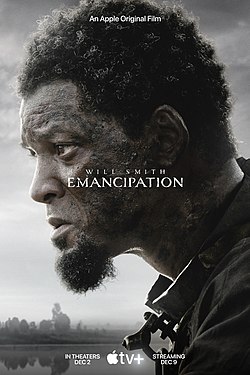
In Emancipation (2022) Smith plays a slave running to freedom after hearing of the passage of the Emancipation Proclamation of January 1, 1863.
Director Antoine Fuqua paints, on black and white film, a dark telling of the harsh and disturbing reality of life as a slave during the American Civil War.
Peter would come to personify the abolitionist movement and the torturous run to freedom that many black Americans took to escape the slave economy.
The actor again finds himself inside a screen character who must figuratively and literally climb out of the devil’s cauldron to emerge in a state of grace as a free person – ultimately hoping to be morally cleansed and all.
One struggle leads to another struggle, and life just never gets easy.