LEONARDO
DICAPRIO QUICKLY FINDS A RHYTHM INTERPRETING AMERICAN STORIES
by PETER THOMAS BUSCH
The child actor grew up from a low income neighbourhood in Los Angeles into a big time Hollywood player by transforming the street kid into the characters found in American history.
Once established, Leonardo DiCaprio began to more often choose film roles depicting biographical heroes or fictional heroes during important historical epochs. DiCaprio also sought to maintain control of his reputation as a film artist by taking on the role of producer.
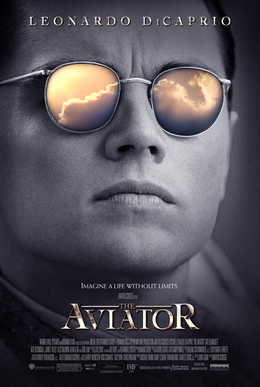
In the Aviator (2004), the caricature of the great American Howard Hughs became humanized under the stewardship of DiCaprio. As well, the character gives the actor the opportunity to transform from actor to character but also changing as the historically important character within a complicated script that twists and turns with challenging life events.
DiCaprio helped better define Hughes who had overtime become a bit marginalized as a historical figure, while the enigmatic mogul character challenged Dicaprio to become a better actor, more involved in film production.
The Hollywood darling had obtained superstardom in the lead role of the Titanic (1997), costarring Kate Winslet, but in the result, the actor’s film career received more notoriety as a matinee idol than critical acclaim as a film artist.
After playing Hughes, DiCaprio transitions to iconic acting roles in the skin of dynamic biopic characters, more and more.
As Howard Hughes, the actor has a major breakthrough with a more dynamic leading character working through the scenes of a complicated script put into a long and winding narrative.
DiCaprio is partly a product of his own fortune, having landed the role of a child in This Boy’s Life (1993), starring Robert De Nero and Ellen Barkin. De Niro was all of Hollywood at the time, and DiCaprio’s star rose just by sharing a screen with the film legend.
The screen success sets DiCaprio up for more serious work as an actor with the era’s leading directors who distinguish themselves in a competitive film industry with the ability to capture complicated historical material in informative and entertaining films.
DiCaprio, the producer, lures in Scorsese, whom he had worked with on Gangs of New York (2002) for which Scorsese assembled an ensemble cast that included a careful balancing of established actors and shining new stars.
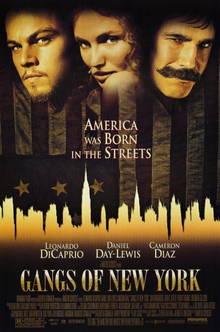
DiCaprio is cast opposite Daniel Day-Lewis, who at the time was already considered one of the greatest actors since Laurence Olivier. And Dicaprio plays Amsterdam, the son of ‘Priest’ Vallon, played by Liam Neeson. Neeson was still riding the waive of critical acclaim that had begun in earnest with the role of Oskar Schindler in Schindler’s List (1993).
Scorsese also proves his worth in the film as an artist by reproducing historical sets from the early days of New Yorkers surviving on the streets of the city, battling among themselves during difficult economic times.
The director and the actor would go on to jointly produce subsequent historically significant films.
DiCaprio also worked with director Baz Luhrmann in Romeo & Juliet (1996). Luhrmann adapts the William Shakespeare play to the life created by the Los Angeles street gangs, with Claire Danes playing Juliet. Luhrmann also casts DiCaprio in the lead for The Great Gatsby (2013), based on the American classic novel by F. Scott Fitzgerald.
In J. Edgar (2011) director Clint Eastwood casts DiCaprio in the title role about the first director of the Federal Bureau of Investigations, J Edgar Hoover.
As well, director Christopher Nolan casts DiCaprio in the lead role of the time and space dreamscape, Inception (2010).
And in Django Unchained (2012) Quintin Tarantino casts Dicaprio in a supporting role as Calvin. The director then recasts DiCaprio in Once Upon a Time in Hollywood (2019).
Over the years, the thrill of transforming into a historical character and the adventure of travelling the narrative back into the time captured by major film productions was more important to DiCaprio than the tabloid fed matinee idol worship, and to a lesser extent, perhaps the money.
Success was no doubt delightful after growing up in a single mother household and surviving on the streets of Los Angeles that had been controlled by ethnic criminal gangs.
Critical acclaim would prove to be more difficult to attain.
DiCaprio intentionally moved away from the celebrity status that the role in Titanic gave him and sought to be defined by more substantial work as an actor, but from time to time, DiCaprio also shows the depth of his art by taking on lighter film fair, such as in Don’t Look Up (2021) costarring Jennifer Lawrence.
The storyline merges DiCaprio’s passions for environmentalism with his passion for film, as two academic astronomers have to lobby Washington to save the planet after discovering a ‘planet killer’ meteorite heading on a collision course with Earth.
The astronomers quickly become disillusioned by the reactions they receive in that the astronomical event is simply not believed or not taken seriously enough. The competing political and economic interests twist and turn the truth of the oncoming catastrophe.
Whereas previous performances had been snubbed for the greatest honors, DiCaprio gave the world a performance that all the award shows could not ignore.
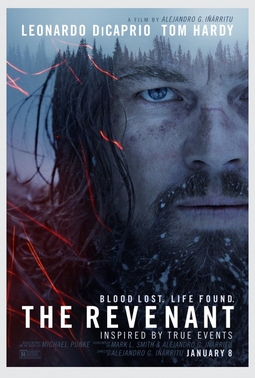
Out of seven Oscar nominations, the Academy recognized the heavily laden acting art created for the performance in The Revenant (2015).
Director Alejandro G. Inarritu casts DiCaprio as Hugh Glass, opposite Tom Hardy as John Fitzgerald, in the 1820s frontier storyline. This historical thriller follows a fur trading expedition and twists rather suddenly with the rivalry between the expedition’s scout and one of the lead trappers.
After a raid by an Indigenous war party, Glass barely survives a Grizzly bear attack. DiCaprio creates a gritty character that survives the harshness of a winter in a barren American landscape.
In a tale exploring the complexities of humanity, Glass recovers his health only to embark on a revenge killing.
DiCaprio is able to shed his previous screen characters for this original role because each previous performance combines a bit of his life sustaining movie magic with a lot of authentic character development.
Howard Hughes proved to be a tormented genius with an Obsessive Compulsive Disorder who at the same time fought one battle after another with his industry competitors, in film and in aviation.
Although Jack Dawson becomes consumed in the adventure of going to America with the love interest he finds on the Titanic, the role is more linear inspired by the outline of a classic love story.
Hoover, like Hughes, is more three dimensional that requires a bit more than the big screen charisma driven by a lot of on-screen power. DiCaprio contributes to Americana by adding to the understanding of the biographical character with his onscreen interpretation of historical facts.
DiCaprio spent a year researching the character and listening to archival recordings.
In Killers of the Flower Moon (2023) DiCaprio, as Ernest Burkhart, teams up with Scorsese and De Niro again for a critically acclaimed film about the oil rich Osage Nation in Oklahoma.
DiCaprio again broadens his acting range by playing opposite DeNiro. The script drops double entendres between the characters and the actors as Ernest is mentored by his uncle, and ultimately takes his advice and succeeds as a result.
The film, directed by Scorsese, explores a series of mysterious deaths among the wealthy indigenous families that own the oil leases in the region. DeNiro plays a land baron who manipulates the system of hereditary title and trusteeship over the wealth generated by the oil fields.
DiCaprio plays a character who is not entirely guilty nor entirely innocent.
While success in Hollywood is often an expensive game of hits and misses, with a miss quite often being catastrophic for a new career, DiCaprio chose carefully and ensured at least shared control of the final product.
Hollywood’s Golden Boy had to take risks, and more often than not succeeded by blending acting art and real life Americana.