
CAREY
CINERAMA
ENDEARING CHARACTER HAS MORE ABRASIVE EDGE IF CALLED UPON
by PETER THOMAS BUSCH
The character gets called upon, time and time again, to provide that reliable performance the director needs to complete the story – a likeable personality that can dissolve into the context of a carefully manicured storyline.
If there is an added accent, and a floral drees, then all the better. Blond hair can be remarkably transformative especially when surrounded by a completely different cast.
Carey Mulligan delivers that artful performance colored into the circumstances of the script that stands out as remarkable while not dominating and distracting from the protagonists driving the narrative forward.
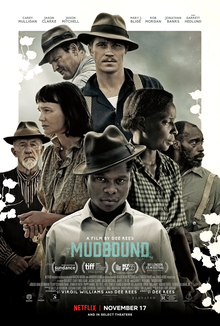
In Mudbound (2017), Mulligan plays the wife of a white landowner who moves down into the Mississippi Delta to buy a cotton plantation. Jason Clarke stars as Henry McAllan. As the family faces adversity, Laura McAllan and Henry McAllan balance each other out in the segregated South.
Laura has long ago resiled herself to a place safe from the wrath of her husband, but as an important maternal support to the family and her children, nevertheless.
In The Dig (2021), in a bit of a reversal, Mulligan compels the storyline forward as the landowner of an England Estate who is hopeful that the unusual land formations on the Sutton Hoo property are signs of buried treasures.
Mulligan becomes tasked with not only changing the role of her screen character but also in that character functioning in quite a different culture. The consistent core of the character is a cerebral maternal personality that can contribute to the scenes whether in the poverty stricken plantation economy of America or the old money, estate economies in cultured England.
Ralph Fiennes plays Basil Brown, hired by Edith Pretty to investigate the earthen mounds on her inherited property which are suspected to be ancient burial chambers grown over and oddly shaped by the passing centuries.
Brown must meticulously excavate so as not to ruin the hoped for history on the way down through the chamber, if there is indeed one below.
Mulligan plays the well balanced landowner who sets about to discover Anglo-Saxon treasure as her public duty.
Mulligan has more of a dynamic role in Maestro (2023), playing a complicated character with a commensurate storyline, twisting and turning through two lifetimes. The camera, for the longest time, remains focused as much on the rising star of American composer Leonard Bernstein as the career of stage actress Felicia Montealegre.
The talented artists meet early on and quickly fall in love after a first meeting, and as any couple do, struggle a bit to prevent themselves from drifting too far apart, after having children and achieving independent career successes.
That sweet motherly nurturing character only gets taken so far. Mulligan then layers on various cultural tropes such as an accent and body language, and a way of being dismissive without being condescending and confrontational.
Felicia must also have the flare and whimsey of an artist.
The costume, hair and make up department enable the character to immerse even further into the situation.
Felicia seems to begin to accumulate a bit more frustration than usual as she realizes that Leonard no longer hides the fact that he is drifting away and taking male lovers. The public displays of dislocation eventually take over the more reasoned private passions.
Mulligan provides an outstanding performance with everything as before performed just a bit more complicated, perhaps because of the more elaborate context and the greater role in created that much needed tension to compel the narrative forward.
In Mudbound, Laura lives in something a bit more than a shack on a plantation. In Maestro, Felicia lives in a New York apartment off Fifth Avenue. Mulligan is much more sophisticated in Maestro, with a grander sweep in her step, but the dimply smile and the worrisome look remain the same.
In Drive (2011), costarring Ryan Gosling, Bryan Cranston and Oscar Isaac, Mulligan plays Irene, the single mother waiting for her husband to be released from prison. The actor goes through a hair and makeup transformation, seemingly smaller but nicer as a blond, with bigger dimples, if that is possible.
And the dialogue underscores her character role. In the Dig, Edith is ultimately in charge, even after the government archeologists take over from Brown. Felicia may spend time reacting to what Leonard is up to, but she has a balanced relationship and enough power to whisper sweet directions to Leonard, for her own peace of mind, but also to keep him out of trouble under the celebrity spotlight.
In Drive, Irene is not submissive, but finds a safe place next to her husband returning to the family after a spell in prison. After befriending a charismatic neighbour. Irene shares a little secret with the audience about a charismatic neighbour as the three charcaters share power during a scene in a small kitchen apartment.
Mulligan is almost all the more the leading character in having wrapped the social and political context of the film around herself, more in tune with the cultural ethos being told by the filmmaker than the meaning of how everyone found their various parts.
Mulligan always appears as more than an isolated part of the story, even though Leonard moves from room to room, and set to set, where she finds him needing help with a new moral dilemma.
The character shares secret insight with the audience as she interacts with the storyline.
This charming personality can also become a bit rough around the edges to take a principled approach.
In Wall Street: Money Never Sleeps (2010) the money doesn’t matter to the daughter of a Wall Street insider released from prison after spending time for insider trading and securities fraud. Michael Douglas reprises his role alongside Shia LaBeouf. Mulligan plays a sort of conduit between the two Wall Street moguls until everyone starts to act a bit more common sensical.
In Wildlife (2018), costarring Jake Gyllenhaal, Mulligan plays the good wife and the good mother who becomes disillusioned when her husband makes one too many decisions that jeopardized the family’s future.
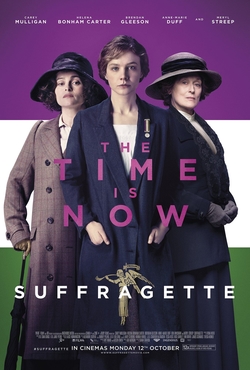
In Suffragette (2015) 1912 London is turned asunder by political activists protesting for the right of women to vote. Mulligan plays biopic character, Maud Watts, a laundry worker of the poor lower class in London who becomes radicalized by the suffragette movement.
Watts was born in the laundry to a mother employed there, and spent her childhood there until her mother died. Watts began working full-time before the child labour laws and quickly moved her way up by the age of 24. The work was hard, though, and the manager abusive.
By the time the narrative starts, Maud needs just a bit more pushing and just a bit of inspiration to become radicalized and join the civil disobedience campaign for the right of women to vote.
Mulligan shows how all the abuse over the years gets channelled through the inability to vote in elections, especially when politicians make the laws that take away women’s rights, such as rights over their own children and the right to a harassment-free workplace.
This charming gentle screen persona ever so gently becomes radicalized for a just cause, but the character still shines through the more emotive transformations occurring as a result of the hardships and abuse.