
OTC50 #129

POSTED
30
WHAT IS AMERICA UP TO THESE DAYS? BLOG #129
MUSIC BOX
PAUL McCARTNEY DROPS THE NEW STUDIO ALBUM, THE BOYS OF DUNGEON LANE, INCLUDING THE SINGLE, DAYS WE LEFT BEHIND, ON MAY 29, 2026
CORNER PRESS
CELEBRATING 250 YEARS SINCE THE AMERICAN REVOLUTION


AMERICAN CINEMA
DEFINING MOMENTS ON FILM UNDERSCORE NATIONAL IDENTITY
by PETER THOMAS BUSCH
A
merican cinema not only defines the national identity but sells the world on the foundational ideals behind the nation state.
Film project genres include films produced solely for entertainment purposes. These films have nominal meaning and little or no educational value, and mainly fulfil the secretly harboured need for escape, fantasy and pleasure.
While even these films can reflect one part of the national identity, historical films and biographical films may reinforce the national lore continually communicated through other mediums, such as journalism, community festivals, national holidays, and chatting while feasting together at a tailgate party.
Often a copycat film made for purely entertainment purposes will help reinforce values around important events, such as the genre of Post-911 terrorist/spy genre films that are driven by fictionalized characters and events but reiterate the primary message to the American public of the need to be resilient against a present, recurring danger specifically directed at the national identity.
Film art is produced through the lens of the filmmaker. Just picking the topic of the film is a subjective process. These antiterrorist films define an entire era of true-to-life threats against America that continually resurfaces from the collective consciousness into the individual consciousness of a generation.
A director may have made films that other people brought to him/her, but there was ultimately a subjective choice to sign onto the production. And what frequently occurs simultaneously is that a filmmaker actively searches for subject matter, purchasing film rights to books or the rights to produce the unpublished stories belonging to individuals and the community.
Director Clint Eastwood initially made movies the way movies were made to entertain the American public. Each production also reflects the America surfacing at the time, such as by taking into consideration that, what would be interesting enough to an audience to make the film successful, would be clearly present in the individual consciousness of enough Americans to make the films as popular as they were.
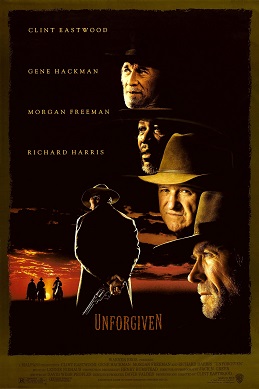
The Western genre belongs to the American plains. And the violent policer genre about street violence belongs to American cities.
Eastwood consciously chose to produce those films, such as Unforgiven (1992), and in doing so reiterated that life in America is a gritty reality, oscillating between the rural truth and the urban truth with the fictionalized characters and dramatized events nevertheless being representative of the American condition.
Directors have distinct styles based on a personal perspective developed within and by America that often is the very reason that they pursue filmmaking as a vocation. A director’s success may often depend on how well a personal viewpoint resonates with Americans.
These films ever so subtly connect the present thoughts of Americans to more and more of a global audience through the distinct lens of the filmmaker. This particular America is interesting to this particular filmmaker, and the interpretation of America on film resonates with enough people to justify the production costs, and so on and so on.
Film production during the studio system aggressively sought to reinforce American values with a code that limited what could be portrayed on screen. A filmmaker may not be successful in individualizing the film production within the rule bound studio system enforced by a dominant player that could pick and choose from a long line of out-of-work directors waiting for a similar opportunity.
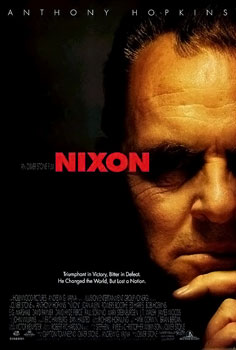
Once the studio system collapsed, academically trained filmmakers emerged who began to produce personalized interpretations of America. Films still had to be commercially successful for producers and investors to give the director a subsequent opportunity at filmmaking.
These independent filmmakers moved away from reinforcing social values, and began to critique the American condition, and document the cultural decay, not necessarily to replace values, but to repair society.
Director Oliver Stone unabashedly exposed the darkside of America with films that detailed the collapse of values in international wars and in domestic politics.
Studied together as a series of films, Stone’s vision is that of a cultural decay occurring simultaneously, in that American involvement in the Vietnam War was part of the increasingly chaotic politics, and the poor judgment of the people’s elected Representatives in Washington DC.
Director Francis Ford Coppola stayed away from politics and instead pointed his camera at the power of organized crime controlling the streets and back rooms of America, with rule based tribalism allowed to fight it out amongst themselves unchecked by law enforcement.
In a way, these films underscored the growing divisions in a changing nation. The Godfather (1972) resonated with everyone alienated by the politics and the orthodoxy pushed upon them involving the nuclear family and living in suburbia.
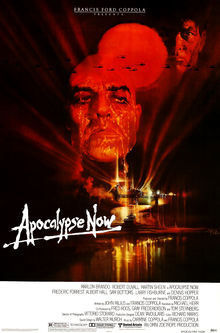
Coppola then provided insight into the Vietnam War with Apocalypse Now (1979). Coppola interpreted the military failure as a product of the recuring human condition that causes civilizations to lose perspective and fall victim to the worst side of human nature.
Stone’s Platoon (1986) followed, depicting the struggle of humanity to function under life and death pressures.
Director Steven Spielberg rarely moved into the dramatization of history genre, and instead spoke to the secret need for escape and to be entertained as a part of a much larger fantasy.
Spielberg answered the questions of Americans, such as where did we come from with Jurassic Park (1993) and are we alone in the universe with and Close Encounters of the Third Kind (1977) and E. T. The Extra-Terrestrial (1982).
Jaws (1975) may have been made for entertainment purposes, closely aligned to the horror genre, but the storyline might also be a metaphor for America’s opposition to tyranny. The great white shark ruled the waters off the summer beach a lot like the tyrant set about the tributaries of Virginia. Killing the shark reflected the struggle that must be endured to maintain a lasting freedom.
Spielberg also did the exact opposite, from time to time. Instead of wild unknown fantasy, painted in broad brush strokes, the director would itemize reality in remarkable detail.
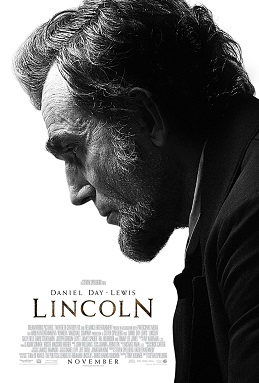
The Colour Purple (1985) exposed the generational trauma of living in the Deep South. Schindler’s List (1993) is a seminal film on the Holocaust. And Lincoln (2012) answers all of the questions about the civil war president.
The audience could say with finality that they understood the Deep South, the Holocaust and the Civil War, and the impact of racism and slavery on the national identity, after watching the director’s interpretation of the iconic characters and the unfolding historical events.
American cultural tropes appear in most films made in Hollywood, even the popcorn films, since the filmmaker still chooses subjectively to dress an empty set like starting a new story from a blank slate.
Spielberg connects the audience to the characters by exploring relationships and why individuals make the choices they make.
Cinema is America’s second biggest export to the world, with an interpretation on film being the near transparent messaging about the state of play in America.
Stone continually challenged the popular wisdom of the official truth with a more skeptical counterculture analyses of the national events.
Eastwood often provided a more literal interpretation, eventually producing biographical films and films about important historical events.
In this way, film not only provides entertainment and escape, but also critique and clarity to the collective consciousness of a nation.
America Film and Society Since 1945, by Leonard Quart and Albert Auster, Santa Barbara, Praeger, ABC-CLIO, LLC, 2011.