#126
#126
LEAVE NOTHING FOR GRANTED IN EITHER DIRECTION MOVING FORWARD
by PETER THOMAS BUSCH
T
he world cradles within its bounds a great contrast in space between the crowded urban streets designed by mortals from industrialization and the empty wilderness God created during Creation.
The cities are controlled by the rules of construction in how steal and glass towers come together and in how communities of people may live together in harmony, while the wilderness functions according to a careful balance of competing interests.
The two spheres share the solitude of every minute of every hour of bright days and dark nights interrupted only by the demands of the earth continually in conflict with the inhabitants struggling to survive therein.
INHABITANTS STRUGGLING TO SURVIVE THEREIN
Humanity enjoys the spirituality of nature, and those people that don’t, enjoy other pursuits.
In the digital age, with so much information available at the fingertips, an even greater need exists for tangible experience where everything all began in nature and the miracles of the balance created by natural laws.
Civilization requires biological diversity, for reasons of longevity and morphology, since God has created all the answers for humanity to discover in a crisis, just as the wildlife have learned the way to survive the great struggle that recurs daily in nature.
How can the two competing interests on Earth survive together?
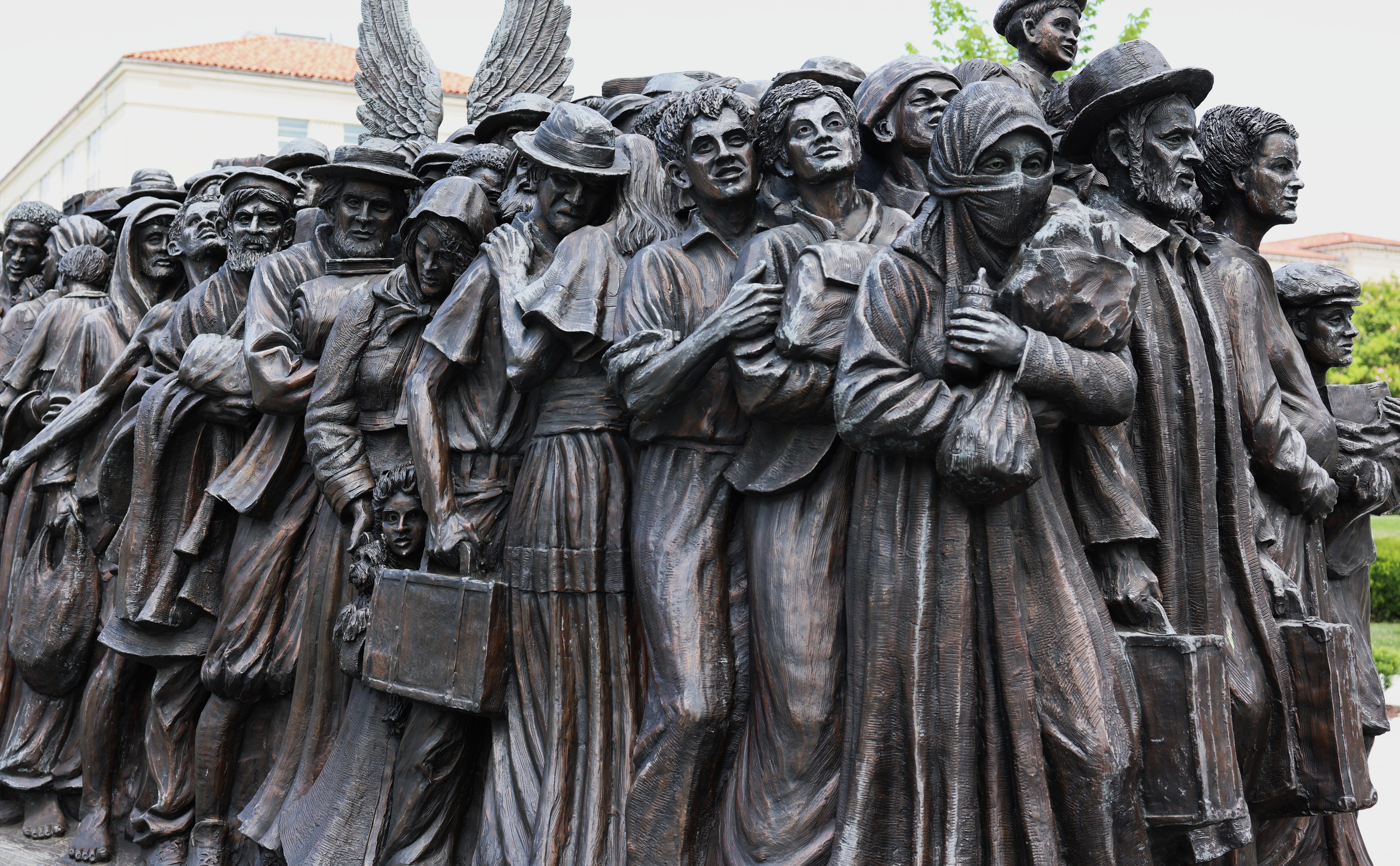
The preservation of human history and the conservation of natural history keeps humanity whole, by preventing further structural fragmentation of a world already divided by politics, religion, opinion and the greed of consumerism and capitalism.
Natural historical monuments teach humanity as much about themselves as the preservation of the creator’s monuments. Historical sites become symbols signifying the past, not in the sense of glorifying the past, but as signposts left along the journey toward the future that everyone travels along.
Residential Schools in Canada, for example, are a reminder of the darker side of humanity and the complications in identifying obvious wrongs as they occur in realtime.
Ellis Island tells visitors of the global immigration into the United States of America that occurred inside New York Harbour and that would ultimately define a nation that influences the free world.
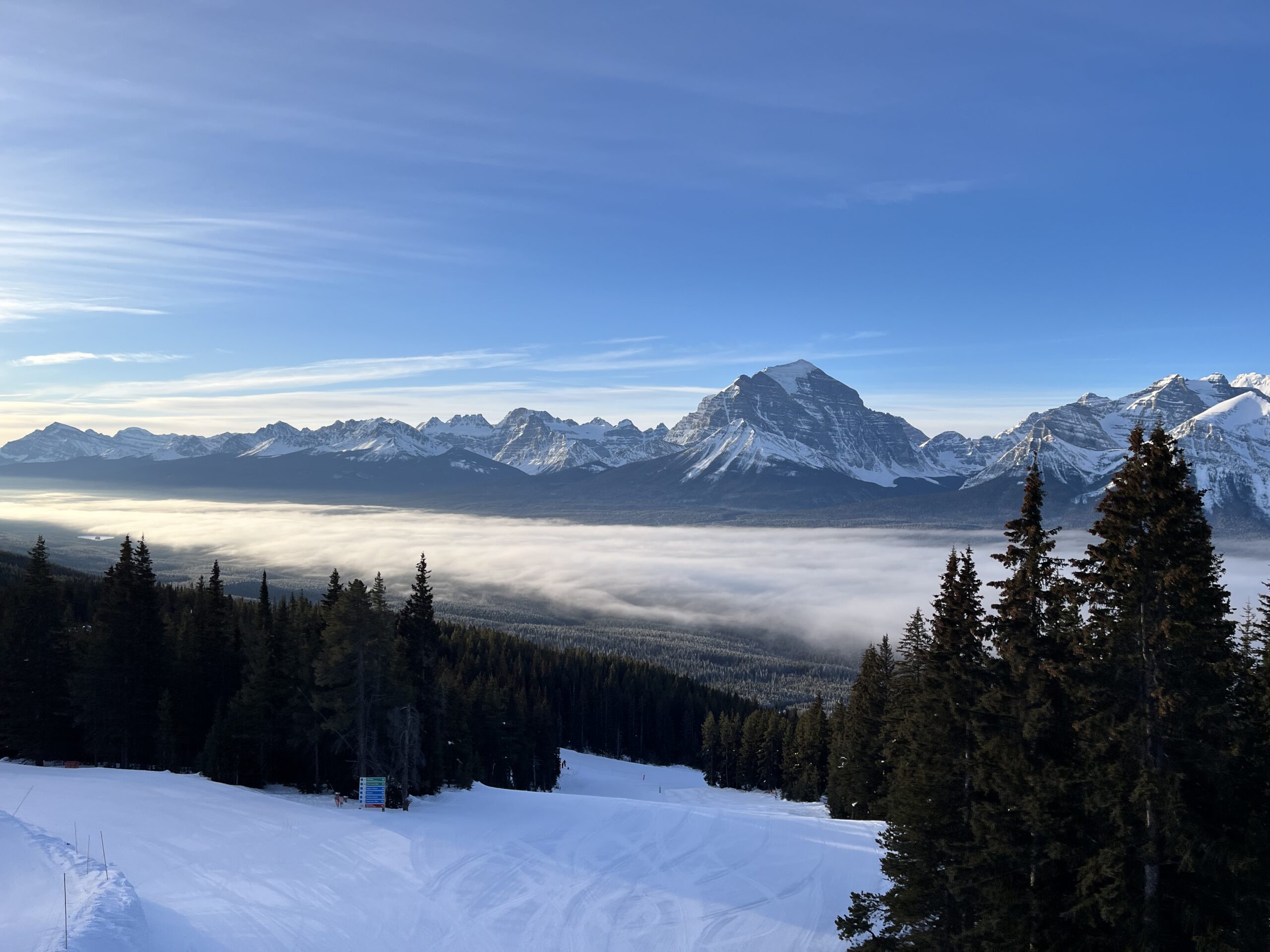
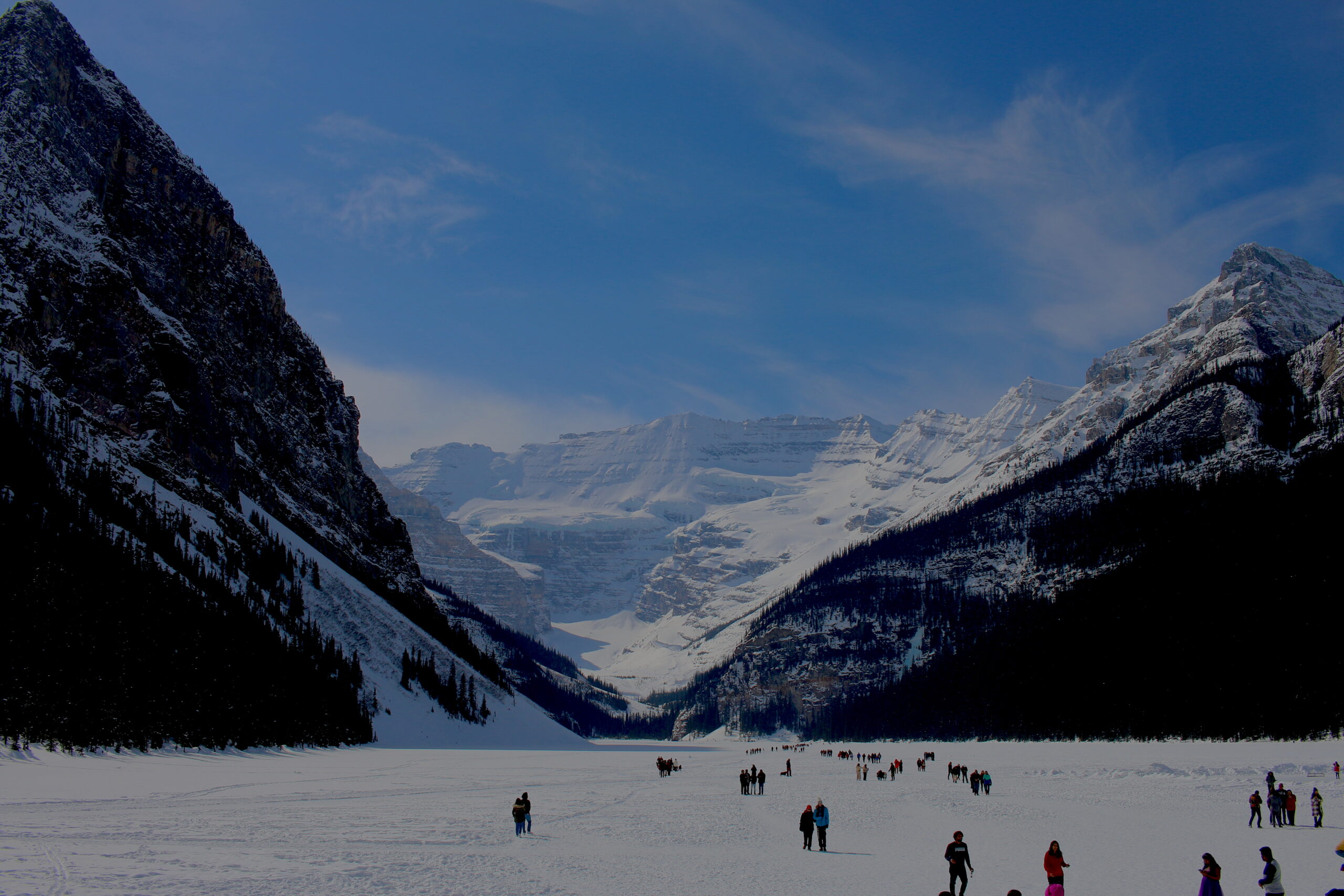
While historical sites often remain to identify conflicts, such as the great battlefields of the American Civil War, natural parks remind adventurists of the wild wonder of Creation. The beautiful blue sky may just present as so appealing for a good reason.
These open wilderness spaces require interpretation just as much as the Hiroshima Atomic Bomb Dome left as a memorial to all those people who died in Japan from the dropping of the first Atomic Bomb.
The historical site has been preserved, not to glorify death, but to encourage peace.
What has been preserved only begins to hint at the conflict resolutions skills of competing interests in the cities.
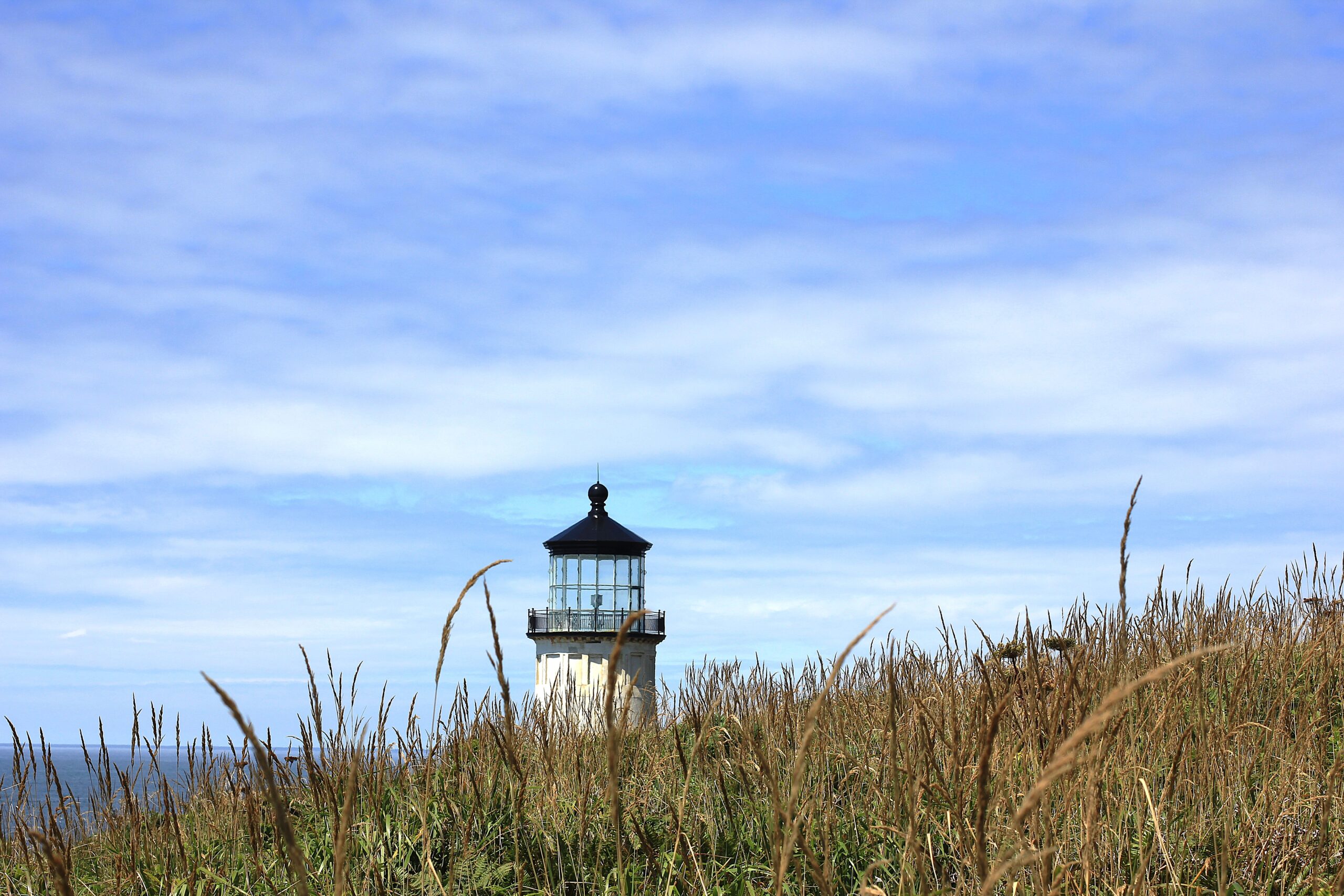
In the wilderness parks, what survives suggests of a compromise arrived at by the preservationists, biologists, and hikers, and not too long ago, also involving industrialists, timber barons and miners.
More wildernesses may be better since the great frontier was shut down, since colonialism has been shunned, and since towns, that sprung up along the great continental railways, became great cities, from which the megalopolis has emerged.
The greater accessibility to the cities the greater services that are required, and the larger urban footprint.
THE MEGALOPOLIS EVENTUALLY EMERGED
Parks visitors diminish the environment, creating a smaller, less wild place. But without visitors, the fragility of the wilderness would be relatively unknown, and like cities, subject to the times.
These outdoor experiences do not exist just to be looked at, but no doubt also add to the quality of life of visitors.
The reasons are often complex, but the changing values, needs and policies of humanity have changed cities and parks alike. And this juxtaposition may have created confusion over the mission.
The mission has always been, though, to extend the human consciousness into the future ad infinitum. Those thinkers who seek self serving answers may ultimately jeopardize the continuity of time from the near distant past into the far off future.
In the gutter of thinking about the topic, archaeological sites often have to be protected from vandalism. Time erodes the historical resource as much as the winds and changing temperatures make mountains crumble, if humanity waits long enough.
The visitor is a threat to the site, whether in human form or an entity more naturally set into play, by potentially upending the careful balance and throwing the context into a helter-skelter spiral of kinetic forces.
The United States began to protect natural historical sites, declaring Yellowstone the first national park in what would become a system of parks in 1872. Canada soon followed with the dedication of Banff National Park as the transcontinental railway was completed in 1885.
Protecting wilderness places was a good idea that would stop the darker sides of humanity from being tempted to embark on another slaughter such as was unleashed on the buffalo herds running wild on the great plains.
The giant timbers continued to be felled after the buffalo on the plains and the whales in the deep blue seas disappeared within the staggering pace of commercialization.
Civilization had to coexist with the wilderness, but why let the sewage from an adjourning town irrevocably damage the water table in a natural park?
History has shown that the task of finding, choosing and securing parks must at least keep pace with the desires of the timber barons, mining companies, oil drillers, and railway men to exploit the landscapes.
RAPID INDUSTRIALIZATION LEFT WORLD BREATHLESS
The rapid industrialization of society has left the Earth breathless at times.
The nationalization of wilderness areas, and even to a degree urban parks within the megalopolis, provide a democratization of the land when not everyone can be property owners, before those places too would be replaced like the seemingly endless frontier once was.
The completion of the Great Canadian Railroad across the continent remains a unifying influence that connects fragments of vibrant civilizations with baron landscapes preserved inside a national parks system, proves just as important as an historical record telling of the hubris of Jacques Cartier in 1534, declaring discovery of the land that was already settled by the indigenous peoples of the St Lawrence and Montreal areas 4000 years prior.
Canada, like many colonies, suffered from the impact of several capitalist paradigms thrust upon the land and the people.
Humanity, though, should remember a beautiful place as the Creator’s much beloved good idea.
At the same time, humanity should point out the site of a tragedy as evidence of the darker side of civilization. Too many people thrust together in too finite spaces creates a toxic potion.
The future may change the interpretation of those monuments from time to time, but still provide useful meaning, nevertheless.
This awareness can lead the world just at the time that society embarks on a transition likely as influential and continuous as the transition from feudalism to capitalism, agrarianism to industrialization, and now, whatever it was, perhaps digitalism, to artificial intelligence.
Greater awareness can result in contemporary interpretations that solve the riddles that seem destined to keep civilization in the past. By deconstructing historical sites or allowing wilderness areas to be destroyed, humanity loses another opportunity for a future generation.
Nothing can replace the experience of hearing for oneself the clatter of rapid transit trains overhead in a bustling city. Nothing can replace the force of the wind whisking you off your feet, or the strength of a river carrying you down stream.
People will always benefit esoterically from physically experiencing what is depicted online, even if the scenes have already been dramatized in streaming movies and documentaries.
America’s National Parks and Their Keepers, by Ronald A. Foresta, Washington DC, Resources for the Future, 1984.
Colonialism and Capitalism: Canada’s Origins 1500-1890, Volume One, by Bryan D. Palmer, Toronto, James Lorimer & Company Ltd., Publishers, 2024.